“You don’t have to worry when it gets dark.” That was the statement a young woman in my college classroom made three decades ago, adding “I do.”
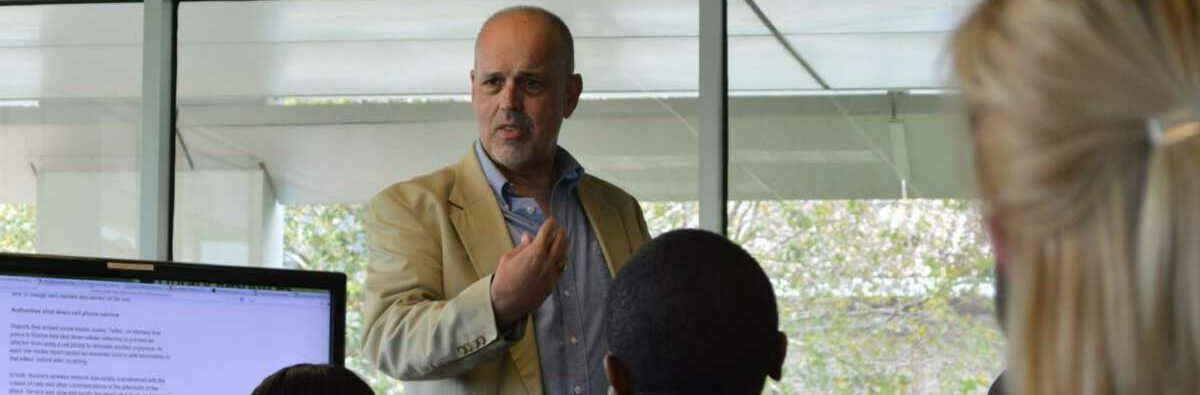
It was fall and the sunset came early in New England, around 4:30 in the afternoon. I was teaching a course named “Race, Gender and Class in the Media,” its duration close to two hours, putting its end well into the darkness.
We were in the midst of a discussion about how Americans’ fear of crime was way out of proportion with reality. The annual FBI Uniform Crime Report statistically proved that most violent crimes were committed not by strangers (so-called “stranger crime”), but by acquaintances, family members, even loved ones.
So, I maintained, our fear is unreasonable, possibly even irrational, given the reality that the majority of people will never experience a violent crime unless it is enacted by someone they know.
The young woman raised her hand.
“When I leave here today and walk to my car, it’s dark and I have fear.” She looked directly at the men among us in the room. “You don’t understand that.”
Recall the name of the course was “Race, GENDER, and class in the Media.”
Operative word in this instance: GENDER.
I was reminded of that long-ago moment this week, when I saw the story of a young woman allegedly sexually assaulted by fraternity members at Cornell University.
It reminded me of that darkness, but on a different level.
Swirling around all the specific questions about the investigation, the victim, the accused, “darkness” took on a different, yet similar meaning.
How much do we, as a society simplify, as I had many times, a violent crime into a place where statistics suggest it happens to others, not to “us.”
Nothing to fear here, or worse, it happened because the victim put (in this instance) herself in a place of inevitability, ensuring it would happen.
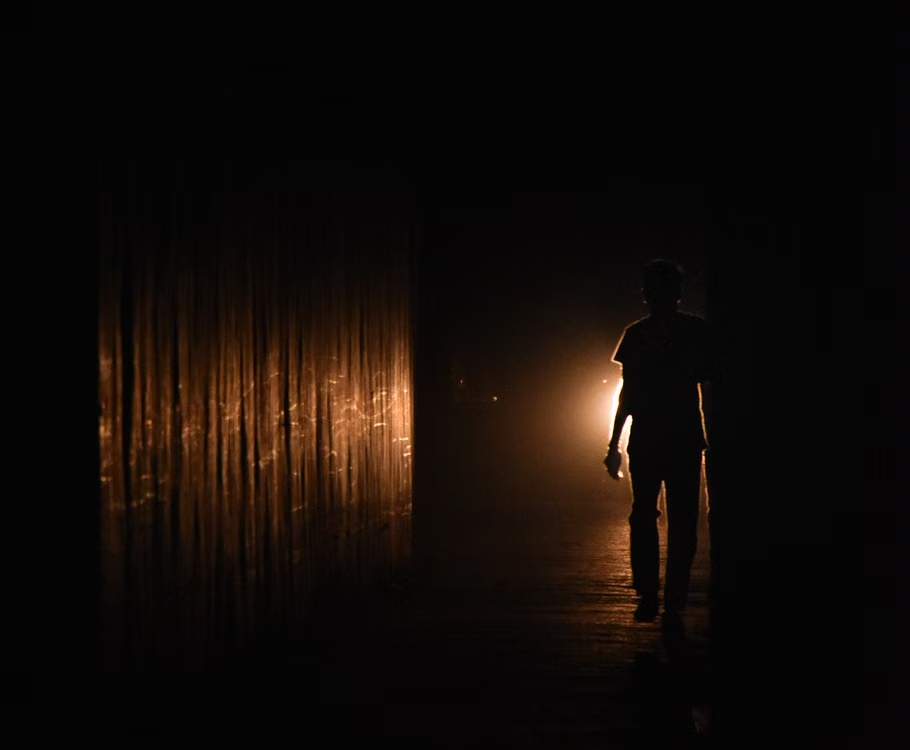
The darkness.
And the light.
Sometimes, but not often enough, light is exposed through someone who stands up.
I’ve experienced that “standup” moment twice.
And it’s unnerving because it’s uncomfortable, precisely because we don’t expect it. It’s not part of the narrative that statistics, which are essentially impersonal, suggest.
“YOU don’t have to worry when it gets dark.”
Darkness, when see through someone else’s eyes, can bring light.
When discussing how the news media cover rape, twice, in two different classrooms at two different universities, I’ve had young women, spontaneously, stand up, moved to tell their stories.
They weren’t prompted. It wasn’t expected. But it happened because they simply wanted to speak.
“I was raped,” one young woman said.
“I was attacked and assaulted,” said another.
Uncomfortable doesn’t begin to describe what I felt in those moments.
I also instinctively knew that I was no longer the expert in the room. They were.
Each had a story that, while alarmingly similar, was also unique because it happened to them. There were no “Jane Does” in the room.
“You don’t have to worry when it gets dark,” resonated again with me. It still does.
So, I listened. And I watched as they told their stories. I heard the fear in their voices.
And something happened. The discomfort subsided, not only for me, but for others in the room.
I finally understood.
There is a difference in how men and women experience fear.
I don’t need research studies to prove it. I’ve heard the voices of those who have lived it.
The darkness is more than a metaphor for so many, far too many, women in our society who are victims not only of the darkness, but also of the deafness of others.
There’s no statute of limitations on the truth, whether at Cornell or anywhere else.
While the darkness may always be a present and an ongoing threat, the light still beckons.
It’s there, and only demands that we have the will to see and the ears to listen.